
Vol. 67 No. 1 (2026): Silliman Journal
“Research is formalized curiosity. It is poking and prying with a purpose.” — Zora Neale Hurston
“Somewhere, something incredible is waiting to be known.” — Carl Sagan
Research begins with curiosity but gains meaning when it illuminates the complexities of human life, society, and knowledge. Each study published in the Silliman Journal contributes to this shared pursuit of understanding, probing questions about culture, education, resilience, governance, and community life. The first issue of 2026 gathers a diverse collection of scholarship that reflects the interdisciplinary character of contemporary research while remaining grounded in issues that matter to communities and institutions.
This issue opens with a study by Girlie Ann Dayap, Joseph E. Padilla, and Corazon A. Padilla, who examine the representation of women in the 2023 film Barbie through a multimodal gender discourse analysis. Drawing on linguistic and visual frameworks, the study reveals how the film simultaneously challenges and reproduces post-feminist narratives by portraying women as empowered yet still shaped by enduring gender expectations. The article invites readers to reconsider how popular culture constructs and negotiates ideas of femininity in contemporary society.
Continuing the discussion of gender and communication, Daisy Mae Catubigan, Joseph E. Padilla, and Corazon A. Padilla explore compliment response strategies among Tourism Management students at Visayas State University. Using pragmatic and sociolinguistic frameworks, the study shows how gendered conversational styles influence how individuals accept, evade, or respond to compliments. Their findings offer insight into everyday linguistic behavior and demonstrate how subtle communicative patterns reflect broader social dynamics.
The issue also features Mun Aung and Jaruvic C. Rafols’ investigation into resilience and coping strategies among first-year students in a liberal arts program in Myanmar. Their research highlights the prominence of task-oriented coping and its positive association with resilience, suggesting that proactive problem-solving approaches play a significant role in how students navigate academic and personal challenges. The study underscores the importance of fostering resilience in higher education environments that increasingly confront uncertainty and change.
In the field of educational leadership, Kendrick M. Kitane examines
the instructional supervisory practices of Master Teachers in relation to the VUCA framework—volatility, uncertainty, complexity, and ambiguity—within the Philippine education system. The study documents strong supervisory practices and proposes the K-VOLT framework as a leadership model that can guide educators as they respond to the evolving demands of contemporary schooling.
Finally, Ian Mark Q. Nacaya, Ester L. Raagas, and Astrid L. Sinco turn our attention to disaster governance at the community level. Their mixed-methods study evaluates the performance of Barangay Disaster Risk Reduction and Management Committees in the Tagoloan River Basin, revealing both the commitment of local actors and the structural challenges they face. The authors highlight the critical need for stronger institutional support, sustained financing, and enhanced leadership capacity to ensure effective disaster rehabilitation and recovery.
Taken together, the contributions in this issue illustrate the breadth of inquiry that defines scholarly work—from media and language studies to educational leadership, psychology, and disaster governance. Each article, in its own way, reminds us that research is not merely an academic exercise but a means of understanding the world and improving the systems and communities we inhabit.
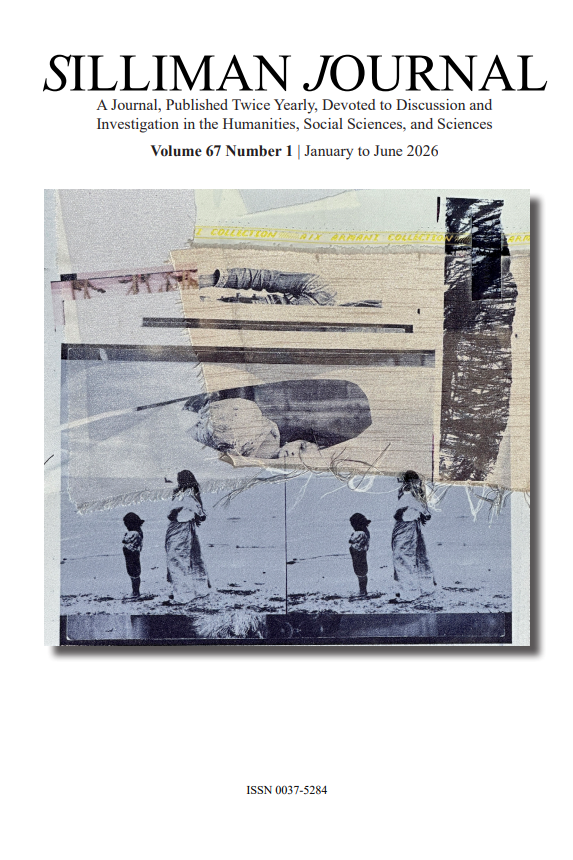
The cover art is adapted from an untitled work by visual artist and fashion designer Dan Ryan Duran. It features a print collage of vintage Philippine photographs rendered on retazzo fabric.
Enjoy!
Warlito S. Caturay Jr. , PhD
Published:
2026-03-27